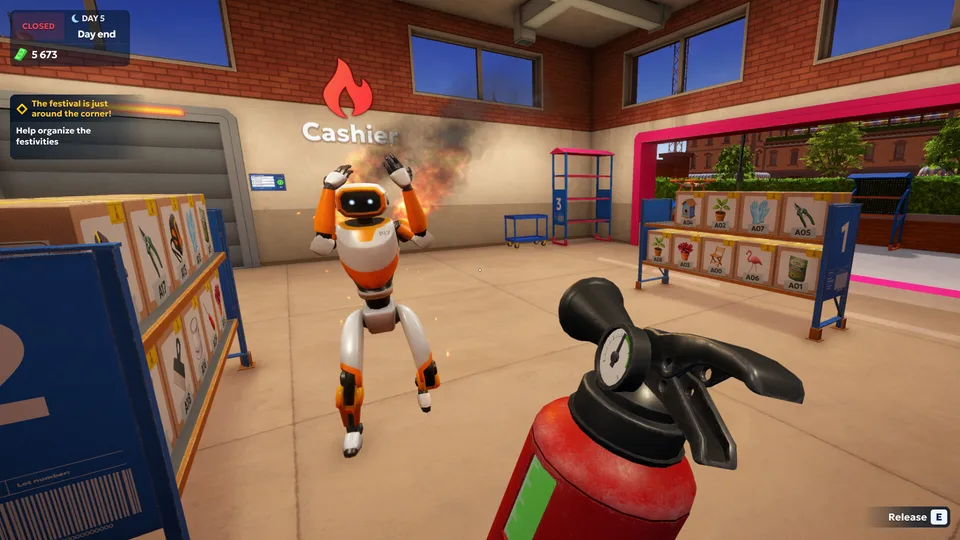
Shipping Store Simulator 2037 Warehouse Robots Guide
Master warehouse robots and automation strategies in Shipping Store Simulator 2037. Discover efficient delivery workflows and optimization tips.
Published: Shipping Store Simulator 2037 Wiki Editorial Team
Table of Contents
Understanding the Future of Delivery Management
Stepping into the boots of a delivery service manager in the year 2037 is no walk in the park, especially when your starting point is a bankrupt warehouse overflowing with unsorted packages. In shipping store simulator 2037 warehouse robots serve as the backbone of your survival strategy, transforming a chaotic room of boxes into a streamlined logistics empire. Managing high-tech facilities efficiently requires understanding how to balance manual labor with automated systems from day one.
Why does mastering warehouse automation matter so much to your bottom line? Without proper robotic assistance, your sorting speeds will plummet, leading to missed delivery windows, unhappy VIP clients, and aggressive competitors undercutting your market share. This guide explores the foundational mechanics of shipping store simulator 2037 warehouse robots, breaking down how automation, drone fleets, and strategic upgrades propel your fledgling delivery hub into a thriving cosmic enterprise.
Core Mechanics of Your 2037 Logistics Hub
Managing early-game operations involves heavy lifting, but the introduction of automated machinery shifts your role from a grunt worker to a visionary logistics director. According to player experience reports, transitioning away from hand-sorting packages as soon as your budget permits is critical for long-term scalability. The developer Playstrom designed the progression loop to reward careful analysis of facility bottlenecks.
Initial Sorting: Manually process incoming deliveries during your first shifts to secure baseline capital.
Robot Acquisition: Purchase basic mechanical units designed for continuous 24/7 warehouse operation.
Process Automation: Monitor workflow bottlenecks to determine which station requires robotic reinforcement next.
Air and Ground Expansion: Integrate delivery vans for bulk orders and drones for urgent, high-priority dispatches.
Automation Tier
Primary Function
Ideal Deployment Phase
Maintenance Considerations
Manual Sorting
Basic box handling and customer greeting
Day 1 to Early Expansion
High fatigue, low throughput
Warehouse Robots
24/7 continuous package sorting
Mid-Game Growth
Needs durability maintenance
Delivery Drones
Rapid transit for urgent orders
Late-Game Logistics
Needs a clear staging area
Balancing Efficiency and Market Competition
As your fulfillment center expands, surviving in Cranelock means playing dirty when necessary. Community reports emphasize that relying solely on standard local deliveries limits your earnings ceiling. To truly dominate the market, managers must venture into advertising campaigns, customer poaching, and lucrative black market VIP orders.
Operating under the cover of night keeps the authorities off your back while securing high-value contracts that normal delivery channels refuse to touch. Balancing these underground ventures with your daily automated warehouse schedule prevents your competitors from seizing regional monopolies. For official community updates and news, check out the Shipping Store Simulator 2037 Steam Page to stay informed on recent patches.
Tip
Always schedule black market operations during late-night hours to minimize trace evidence and avoid unwanted attention from federal oversight agencies in the game world.
Scaling Up From Warehouse Floor to Cosmic Delivery
When terrestrial real estate feels too cramped, your logistics ambitions must reach for the stars. Late-game development transitions your business model from a regional courier service to an interplanetary shipping powerhouse. Constructing a dedicated delivery rocket opens up extraterrestrial markets, allowing you to fulfill shipping requests for a non-human clientele.
Ground Fleet Management
Utilize heavy-duty delivery vans for massive bulk orders across the sprawling urban landscape of Cranelock.
Aerial Logistics
Deploy fast-response drone fleets to handle urgent time-sensitive packages and beat rival corporate response times.
Cosmic Expansion
Build and launch rockets to unlock massive interplanetary shipping routes once your terrestrial warehouse reaches maximum capacity.
Expansion Phase
Transport Method
Target Clientele
Primary Risk Factor
Local Hub
Manual & Foot Courier
Standard Citizens
Low initial revenue
Urban Grid
Vans & Drones
VIP Customers & Businesses
Rival sabotage and traffic
Interstellar
Delivery Rockets
Cosmic Entities
Massive upfront resource cost
Frequently Asked Questions
Who developed Shipping Store Simulator 2037?
The game was developed by Playstrom and published by SayGames, officially launching on Steam on October 14, 2026.
How do shipping store simulator 2037 warehouse robots improve efficiency?
These mechanical units operate 24/7 to sort incoming cargo continuously, eliminating human fatigue and allowing you to focus on business expansion and VIP contracts.
Is there a multiplayer mode available?
According to official Steam feature lists, the title is strictly a single-player experience focusing on individual management and automation strategies.