Shipping Store Simulator 2037 First Impressions Review
Read our shipping store simulator 2037 first impressions. Discover gameplay mechanics, automation tips, and player experiences in this simulation.
Published: Shipping Store Simulator 2037 Wiki Editorial Team
Table of Contents
Introduction to the Future of Logistics
Stepping into the shoes of a bankrupt delivery service manager in a near-future coastal city sounds like a stressful way to spend an evening, but it is precisely the premise that makes shipping store simulator 2037 so utterly compelling. If you have been following recent simulation releases, you already know that managing packages, dealing with automated robots, and dodging neighborhood chaos can quickly consume hours of your time. This guide delivers comprehensive shipping store simulator 2037 first impressions, breaking down everything from warehouse management to the quirks of living in Cranelock.
Tip
When starting your journey, prioritize organizing your initial shelf placement right behind your primary counter to minimize movement time during the chaotic morning hours.
Setting Up Shop in Cranelock
The game drops you into a compact, near-future city called Cranelock, where managing a parcel pickup point requires balancing customer queues with incoming wholesale deliveries. According to player experiences shared within the community, the early game introduces a frantic rhythm where you must manually sweep floors, turn on power switches, and sort boxes before the 9 AM opening bell.
The transition from a simple manual storefront to an automated logistics hub defines the core progression loop. For a closer look at official updates and community discussions, you can check out the official Steam Store Page for Shipping Store Simulator 2037.
Manual Labor Phase
In your first few days, you handle everything manually: unpacking vans, stamping labels, and sweeping trash. Stamina and time management are critical here.
Automation Transition
Once funds accumulate, you unlock robotic loaders and customer service assistants. This shifts your role from a hectic worker to a strategic manager overseeing warehouse operations.
Automation and Managing Your Robot Workforce
One of the most discussed aspects in recent shipping store simulator 2037 first impressions is how the game handles automation. Rather than overwhelming you instantly, robots are introduced precisely when repetitive tasks start competing with new gameplay layers.
Robot Type
Primary Function
Unlocked Stage
Customer Service Robot
Greets clients, accepts orders, and hands out bags
Mid-game queue growth
Warehouse Loader
Clears entrance docks and unloads delivery vans
Active delivery expansion
Repair Units & Helpers
Maintains equipment durability and handles bulk sorting
Advanced store levels
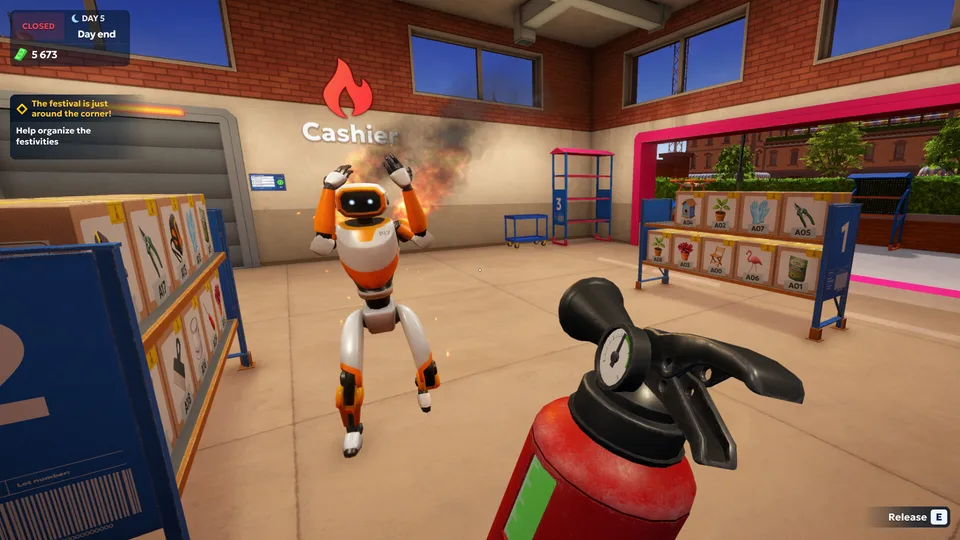
Community reports indicate that machinery degradation adds a layer of maintenance tension. Equipment and robots feature a hidden durability value that drops with use. Ignore them too long, and a machine might catch fire, requiring you to chase it down with a fire extinguisher and a repair kit.
Keep a spare repair kit handy in your delivery van.
Monitor robot performance speeds before they hit critical failure.
Balance manual sorting tasks with drone delivery schedules.
The Economy and Pacing of the Full Release
Transitioning from the initial demo to the full release brings notable changes to pacing and economic balance. According to community feedback, players often experience a steep grind early on while saving for their first automated helpers, followed by a rapid influx of capital where money ceases to be a limiting factor.
Warning
Economic progression can feel uneven; many players report jumping multiple upgrade tiers simultaneously once automated wholesale pipelines are fully established.
Morning Prep: Turn on warehouse power, brew stamina coffee, and verify incoming delivery schedules.
Queue Management: Process regular customer QR codes and hand out branded bags efficiently.
VIP Fulfillment: Load up the delivery van for special nighttime or high-profile client drops across Cranelock.
Frequently Asked Questions
How long does it take to complete Shipping Store Simulator 2037?
Most players report completing the core gameplay loop and storylines in roughly 8 to 15 hours, depending on how deeply they engage with secondary quests and automation setups.
Are there missable achievements in the game?
Community reports confirm that there are no missable achievements, though finding all hidden broken robots for specific maintenance tasks requires thorough exploration around locations like the motel parking lot.
What makes shipping store simulator 2037 different from typical shop manager games?
Instead of managing a traditional retail storefront, you operate a package pickup and logistics hub that expands into urban delivery runs, drone logistics, and underground VIP storylines.