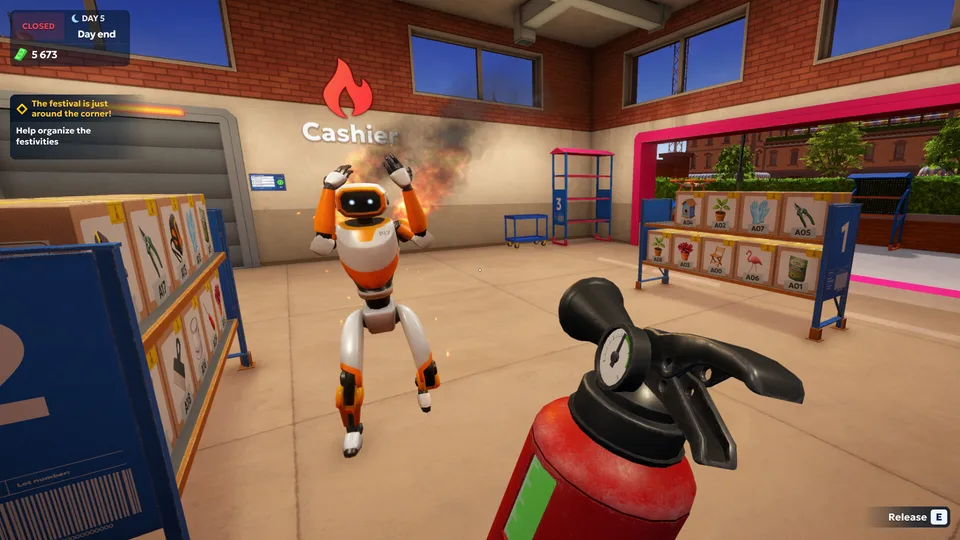
Shipping Store Simulator 2037 Review: A Futuristic Sim
Read our in-depth shipping store simulator 2037 review to explore warehouse automation, drone delivery, and futuristic logistics management.
Published: Shipping Store Simulator 2037 Wiki Editorial Team
Table of Contents
Introduction to the Future of Logistics
Stepping into the year 2037 changes everything you thought you knew about parcel management, making a comprehensive shipping store simulator 2037 review essential for simulation fans. Whether you are eyeing the full release or exploring the early systems, understanding how to balance counter service with warehouse upgrades is the key to outperforming rival companies like Quickbox. If you want to dive right in, you can check out the official Shipping Store Simulator 2037 on Steam to check current pricing and system requirements.
Managing an abandoned logistics hub requires quick reflexes and strategic planning from day one. This shipping store simulator 2037 review breaks down the mechanics, automation options, and economic challenges awaiting you in the vibrant, futuristic city of Cranelock.
Core Mechanics and Early Game Operations
At the start of your journey, your success relies entirely on manual labor. You must greet walk-in clients, fill bags with requested items like tools or gardening supplies, and manually unload incoming delivery vans.
According to player experience reports, early-game efficiency dictates your financial growth. Here is a breakdown of essential early-game tasks and their immediate impacts:
Counter Service
Serving walk-in customers quickly prevents them from leaving. Keeping inventory accessible near the front counter minimizes walking time.
Van Unloading
Unloading shipments manually is tedious but necessary before you can afford automated warehouse help.
Coffee Boosts
Drinking coffee increases your sprint bar significantly, allowing you to rush across town for VIP deliveries without wasting daylight.
To help you visualize the initial workflow, the table below outlines the primary duties and challenges during your first few shifts:
Operational Area
Manual Focus
Automation Potential
Front Counter
Direct customer service & bagging
Customer service robots
Warehouse Floor
Manual sorting & labeling
Labeling machines & shelves
Town Deliveries
On-foot running & van transit
Drones & rocket cargo
Automation and Robot Workforce Management
As your revenue grows, automation becomes necessary to keep up with customer demand. In this shipping store simulator 2037 review, we examine the robot hierarchy and why choosing the right upgrade first matters.
Players often debate whether to purchase a loader robot or a customer service assistant first. Based on community feedback, customer service bots prevent you from losing walk-in sales while you run errands across town.
Save Capital: Accumulate funds by serving daily customers and completing lucrative VIP requests.
Unlock Warehouse Levels: Upgrade your facility tier to access advanced robotic terminals and station setups.
Deploy Assistants: Purchase your first customer service or loader robot to offload repetitive tasks.
The following comparison details the core robotic units available in the game:
Customer Service Robot
Takes over front desk duties, ensuring customers are served instantly even when you are delivering parcels across Cranelock.
Loader Robot
Automatically unloads incoming delivery trucks, saving you physical effort during high-volume delivery hours.
Cleaning Robot
Maintains facility hygiene by cleaning up messes, preventing potential negative impressions in the store.
City Exploration, VIPs, and Rivalries
Cranelock is far more than a simple warehouse backdrop; it is a living city filled with eccentric characters, secret storylines, and fierce competition. Throughout your playthrough, you will encounter VIP clients requesting specialized items—ranging from repair kits for broken city robots to unusual items like flamingo lawn ornaments.
Community reports indicate that interacting with street-level NPCs, such as the local homeless resident Tim who trades useful warehouse tips for empty boxes, adds a layer of narrative depth. Meanwhile, rival company Quickbox operates blimps and vans overhead, reminding you that market dominance requires aggressive advertising and timely service.
Warning
Competitor interference and black market VIP orders require careful night-time execution to avoid attention from law enforcement agencies.
Scaling Up: Drones and Space Logistics
Once local streets become too small for your ambitions, the game expands its geographic scope. Upgrading your infrastructure unlocks drone delivery networks and eventually space-faring rockets capable of servicing cosmic stations.
The economic scaling of your logistics empire relies on smart license investments. The table below illustrates the progression tiers available to managers:
License Tier
Typical Goods
Operational Requirement
Tier 1
Gardening & Repair goods
Basic manual setup
Tier 2
Consumer electronics & Medical
Expanded warehouse space
Tier 3
Space goods & Heavy cargo
Drone ports & Rocket pads
By balancing local walk-in demands with high-value cosmic payloads, your bankrupt warehouse transforms into an interplanetary shipping titan.
Frequently Asked Questions
What is the main objective in Shipping Store Simulator 2037?
You manage a futuristic delivery hub, starting with manual sorting and scaling up to fully automated warehouses, drone networks, and rocket shipments while competing against rival companies.
How do robots improve gameplay efficiency?
Robots automate repetitive tasks like front-desk customer service, van unloading, and store cleaning, freeing you up to handle VIP deliveries and facility expansions.
Is Shipping Store Simulator 2037 available on PC?
Yes, the game is available on Steam for PC, developed by Playstrom and published by SayGames.
Can I play the game with a controller?
Yes, the game features full controller support for both Xbox and PlayStation controllers on PC.