Shipping Store Simulator 2037 Demo Walkthrough Guide
Master the shipping store simulator 2037 demo walkthrough with our expert guide. Discover logistics management tips, automation, and gameplay strategies.
Published: Shipping Store Simulator 2037 Wiki Editorial Team
Table of Contents
Getting Started with the Shipping Store Simulator 2037 Demo Walkthrough
Stepping into the future of logistics can feel overwhelming when your warehouse floor is buried in cardboard boxes and impatient customers are tapping their feet. Embarking on a comprehensive shipping store simulator 2037 demo walkthrough gives you the tactical advantage needed to transform a chaotic distribution center into a streamlined, high-profit machine. Whether you are eyeing your first automated helper or trying to understand how to keep your customers moving smoothly through the queue, mastering the fundamentals right from the start is essential for survival in the bustling coastal city of Cranelock.
Managing a futuristic shipping hub developed by Playstrom requires far more than just clicking rapidly on incoming parcels. In this detailed shipping store simulator 2037 demo walkthrough, we will break down every critical phase of early logistics management, from clearing initial debris and operating manual labelers to integrating your very first service robots. By understanding the core mechanics early on, you can avoid costly operational bottlenecks and set yourself up for long-term financial success in the full release.
Warehouse Setup and Early Logistics Management
Your journey begins inside a neglected, dusty warehouse space situated in a vibrant near-future city. Before you can welcome your first wave of customers or process commercial shipments, you must clean up the physical environment.
Based on community reports and player experience, the early gameplay loop requires hands-on physical labor. You will need to grab trash bags, clear away environmental clutter, mop up fluid puddles, and prepare your loading docks for active service. Neglecting these foundational chores will leave your workspace disorganized and slow down your overall item processing speed.
Task Category
Action Required
Operational Benefit
Environmental Cleanup
Collect trash bags and mop floors
Prepares the warehouse for safe inventory movement
License Activation
Purchase basic operational licenses
Unlocks specific goods, repair items, and regular shipments
Loading Dock Prep
Press the main terminal button
Receives initial stock and empty labeled boxes
Once the physical space is tidy, activating the loading dock initiates your very first batch of incoming merchandise. Unloading boxes efficiently and placing them onto the correct category shelves—such as gardening tools, decorations, and home goods—ensures you can locate items instantly when customers arrive at your counter.
Clear Debris: Pick up trash bags and clear out any unwanted items blocking your warehouse walkways.
Acquire Licenses: Spend your starting funds on basic commercial licenses to authorize incoming shipments of goods.
Unload & Label: Receive your delivery at the loading dock, unpack the boxes, and scan items onto appropriate shelving units.
Mastering Customer Service and Queue Flow
Managing customer traffic is the true heartbeat of your daily operations. In the early stages of the game, customers arrive in waves, presenting orders that must be fulfilled quickly and accurately.
According to player experience, standing behind the counter all day scanning items manually will quickly drain your time and stamina as your business grows. Each customer presents unique order requirements. You must grab the correct box from your shelves, place it on the counter, scan the barcode, and hand over the package before the queue backs up.
Manual Counter Service
In the early game, you must personally greet visitors, match their requested items from your inventory shelves, and scan barcodes manually to complete transactions.
Queue Optimization
Keeping your service area uncluttered and organizing your shelves by product categories will drastically reduce the time spent searching for misplaced items during peak hours.
To help you balance counter service with inventory management, consider the following tactical breakdown of daily customer flow and time management:
Operational Phase
Time Window
Primary Objective
Morning Prep
Before 09:00
Unload night deliveries, sort stock, and clear warehouse trash
Store Hours
09:00 to 21:00
Serve incoming customers, process counter orders, and handle urgent requests
Evening Maintenance
After 21:00
Repair damaged equipment, order new stock, and prep for the next day
Transitioning to Automation: Robots and Equipment
As your shipping store gains popularity, routine tasks will begin to compete with your broader business goals. This is the exact moment when automation becomes necessary.
As noted in developer insights and community reports, automation tools like the Customer Service Robot and the Loader are deliberately introduced when manual tasks become too repetitive. The Customer Service Robot takes over counter duties—accepting orders, packing branded bags, and handing items to customers. Meanwhile, the Loader keeps your entrance clear of unmanaged deliveries while you are busy running errands or handling special requests around the city.
Tip
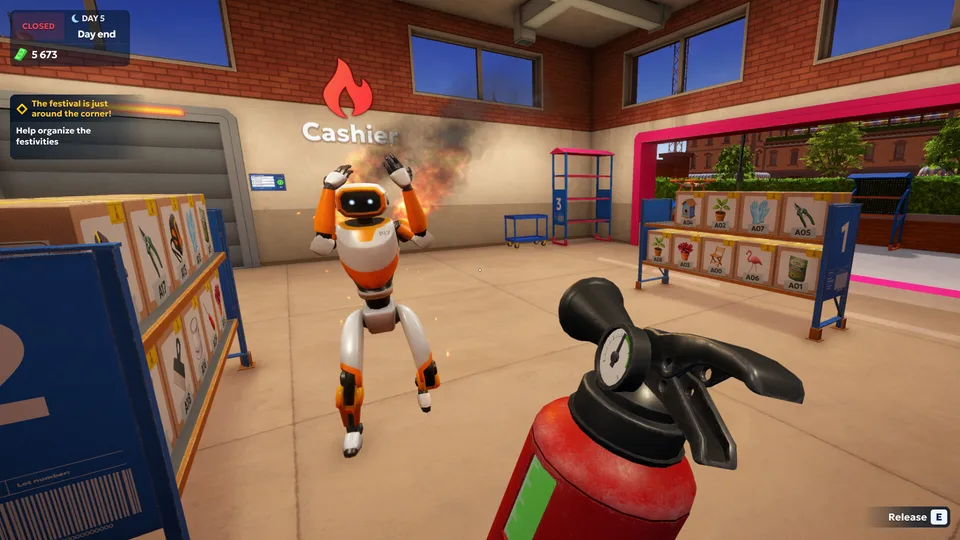
Always keep a spare repair kit stored safely in your vehicle or warehouse. Machinery and robotic units suffer from hidden durability wear over time, and ignoring a malfunctioning robot can lead to critical, fiery breakdowns that require immediate extinguisher action.
The evolution of your warehouse technology follows a structured path of reinvestment and efficiency gains. Review the table below for an overview of key automation tiers:
Automation Level
Key Equipment / Unit
Primary Function
Tier 1 (Manual)
Hand Scanner & Manual Labeler
Basic item tracking and manual customer service
Tier 2 (Assisted)
Customer Service Robot & Loader
Automated counter management and entrance clearing
Tier 3 (Advanced)
Automated Drones & Bulk Delivery Systems
High-speed fulfillment and city-wide transport
Advanced Strategies: VIP Orders and Night Deliveries
Beyond standard retail customers, running a successful distribution center eventually exposes you to the more secretive and lucrative side of Cranelock. VIP orders and specialized black-market requests introduce a brand-new layer of strategic depth to your daily routine. Note that these systems belong to the full version released on October 14, 2026; the free demo does not include VIP orders or black market deliveries.
Player experience shows that VIP clients often request high-value items or sensitive deliveries—such as specialized repair inks, grilling equipment, or even nocturnal signal flares. These missions frequently require you to venture out into the city, utilize delivery vans, or coordinate drone deliveries. However, you must remain cautious; night deliveries come with strict scheduling rules and unique risks that separate casual warehouse operators from master logistics tycoons.
Warning
Night-time orders will only be accepted by clients during designated nocturnal hours. Attempting to deliver restricted or secretive cargo during daylight can disrupt your schedule and draw unwanted attention from your corporate competitors.
Is the shipping store simulator 2037 demo walkthrough applicable to the full game?
While the shipping store simulator 2037 demo walkthrough covers foundational mechanics like early cleaning, manual scanning, and initial shop setups, the full release expands significantly with advanced robots, delivery vans, drone zones, and complex VIP storylines.
How do I prevent my robots from breaking down?
Every robot and piece of equipment features a hidden durability metric that decreases with use. Regular maintenance using repair kits will keep your automated workforce operating at peak efficiency and prevent critical overheating or fires.
When do I unlock automated assistance in the game?
Automated assistants like the Customer Service Robot and the Loader become available for purchase once you have accumulated sufficient capital and expanded your warehouse operations past the initial manual bottleneck phase.
How long does it take to complete the main game?
According to community reports and player statistics, completing the core gameplay loop, stories, and achievements takes approximately 8 to 15+ hours depending on your playstyle and automation efficiency.