shipping store simulator 2037 how to extinguish robot fires
Learn how to manage warehouse hazards and extinguish robot fires in Shipping Store Simulator 2037. Discover expert tips for automation success.
Published: Shipping Store Simulator 2037 Wiki Editorial Team
Table of Contents
H2: Mastering Warehouse Maintenance and Automation
Running a futuristic logistics hub requires a delicate balance of human management and robotic efficiency, especially when dealing with complex hazards. If you are currently exploring shipping store simulator 2037 how to extinguish robot fires, you are likely facing the chaotic reality of neglected automated assistants. Understanding how equipment wear and tear operates is crucial for maintaining a profitable delivery service in Playstrom's near-future management game.
Mastering shipping store simulator 2037 how to extinguish robot fires prevents catastrophic workflow bottlenecks in your bustling Cranelock warehouse. Without proper upkeep, your valuable mechanical workforce can quickly turn your automated paradise into a blazing disaster area. This guide breaks down everything you need to know about equipment durability, critical mechanical failures, and effective firefighting strategies.
H2: Understanding Equipment Durability and Mechanical Wear
Every machine and automated robot in your facility operates on a strict durability system with a maximum value of 100. Every single action performed by a labeling machine, loader, or customer service assistant chips away at this inner metric. According to player experience reports, different tools feature unique wear rates; for instance, manual labeling machines are designed for 50 uses at full durability, losing 2 points per operation.
Equipment Type
Max Durability
Wear Rate Per Use
Performance Impact
Manual Labeling Machine
100
2 points
Slower processing speed
Automated Labeling Machine
100
Lower than manual
Stable until critical threshold
Customer Service Robot
100
Varies by task frequency
Erratic behavior when ignored
Warehouse Loader
100
Varies by workload
Panic state and potential fire
As machinery wears down, performance noticeably slows down, signaling that intervention is desperately required. If you completely ignore these maintenance warnings, your automated assistants will eventually suffer a critical mechanical failure.
Tip
Proactive Maintenance Tip
Always keep a spare supply of repair kits in your delivery van and warehouse storage doors to ensure you can instantly service broken or burning units in the field.
H2: What Triggers Robot Fires in Your Warehouse?
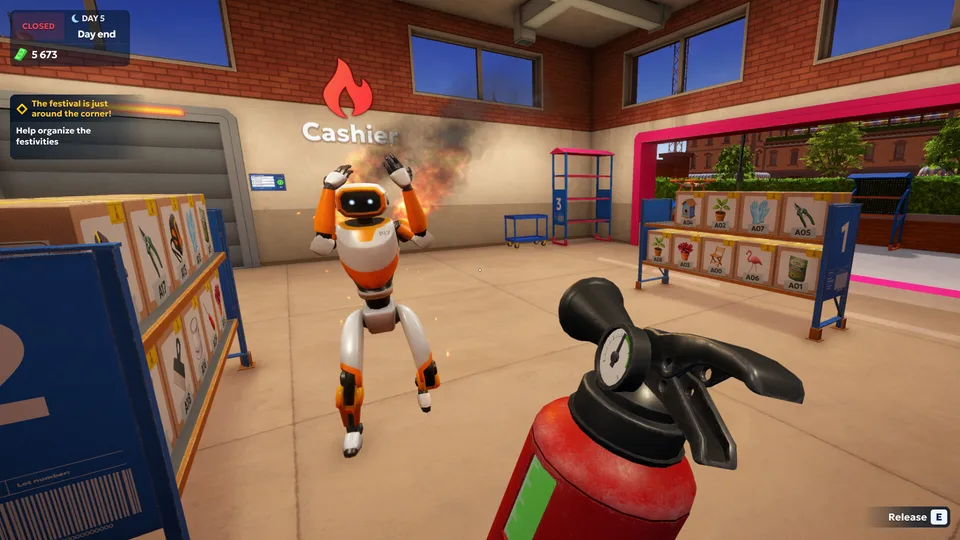
Neglecting your mechanical workforce pushes units past standard operational wear into a critical state of thermal overload. When a robot's hidden durability drops to absolute zero without intervention, it breaks down dramatically. A community report highlights that critical condition is intentionally chaotic: the affected robot will catch fire, panic, and sprint erratically across the warehouse floor.
Warning
Critical Hazard Warning
Do not attempt to apply standard repair kits immediately when a robot is actively burning. You must neutralize the active flames first to prevent further facility damage.
Developers deliberately balanced this mechanic to reward attentive management without permanently punishing players with total equipment destruction. While early development prototypes featured explosive mechanics that permanently destroyed units, the current build ensures that fires remain manageable hazards rather than run-ending disasters.
H2: Step-by-Step Guide: How to Extinguish Robot Fires
When an automated assistant catches fire, you must execute a specific emergency response sequence to restore order to your logistics hub. Follow this structured protocol to handle the crisis safely:
Identify the Hazard: Locate the panicked, burning robot running haphazardly through your warehouse floor.
Equip the Fire Extinguisher: Switch to your fire extinguisher tool immediately upon spotting the thermal emergency.
Douse the Flames: Spray the burning robot directly until the active fire is completely extinguished.
Apply a Repair Kit: Once the flames are out, use a standard repair kit to restore the unit's durability back to its maximum 100 value.
Applying a single repair kit completely restores a worn machine or robot regardless of how severe the prior damage was, making recovery straightforward once the immediate fire threat is neutralized. You can check out official game updates and community discussions directly on the Shipping Store Simulator 2037 Steam Page.
H2: Optimizing Your Maintenance Routine
Preventing fires before they start is the hallmark of an elite logistics manager. Establishing a reliable daily inspection routine saves valuable time and keeps your automated workers functioning at peak efficiency.
Inspect all automated robot durability meters at the start of every shift.
Restock repair kits in both vehicle doors before heading out for city deliveries.
Prioritize upgrading high-traffic automated labeling machines to reduce wear rates.
Clear warehouse entryways so loaders can maneuver without bottlenecking.
By integrating these preventive steps into your daily warehouse management, you will spend less time chasing burning assistants and more time scaling your delivery empire across Cranelock.
How do I know when a robot is about to catch fire?
Robots begin working noticeably slower as their durability decreases. If you notice a drop in operational speed, inspect the unit immediately to prevent it from catching fire.
Can I use a repair kit while a robot is still burning?
No, standard repair kits cannot be applied while active flames are present. You must first use a fire extinguisher to put out the robot fires before the repair kit will register.
Do robot fires destroy my equipment permanently?
Fortunately, no. Developer balancing ensures that fires cause panic and chaos rather than permanent destruction, allowing you to salvage and repair your valuable units safely.
Where can I find spare repair kits for emergency maintenance?
You can store and carry repair kits inside your delivery van doors and warehouse inventory, ensuring you always have emergency supplies ready for field repairs.